
A successful church event does not end when the final song is played, the last announcement is made, or everyone leaves the building. In many ways, that is when the most important work begins.
Learning how to follow up after a church event can help your church turn a one-time gathering into an opportunity to build relationships, encourage spiritual growth, connect new people with your ministry, and invite attendees to take a meaningful next step.
Whether your church recently hosted a conference, outreach, youth event, community gathering, leadership training, or special service, the follow-up process helps people know that they were not simply counted as attendees. They were seen, valued, and welcomed.
In this guide, we will walk through 12 practical church event follow-up ideas your ministry can begin using, even if you have a small team or limited technology.
Why Is It Important to Follow Up After Church Events?
Church events often require weeks or even months of planning. Teams design flyers, organize volunteers, prepare the program, promote the event, and make sure everything runs smoothly.
However, without a follow-up plan, many of the relationships started during the event can quickly fade.
Effective church event follow-up gives your ministry an opportunity to:
- Thank people for attending.
- Welcome first-time guests.
- Answer questions attendees may have.
- Share sermons, videos, notes, or other event resources.
- Invite people to another service, group, class, or ministry.
- Identify people who need prayer or pastoral care.
- Receive feedback that can improve future events.
The purpose is not to pressure people. The purpose is to continue the relationship that began when they attended your event.
Your church event may open the door, but thoughtful follow-up helps people feel comfortable walking through it.
1. Prepare the Follow-Up Plan Before the Event
One of the best follow-up strategies for church events is to build the follow-up process before the event begins.
Do not wait until the day after the event to ask what your church is going to do with all the names, phone numbers, and email addresses it collected.
Decide in advance:
- Who will send the thank-you message?
- Who will contact first-time guests?
- What next step will attendees be invited to take?
- Which platform will store registrations?
- When will each follow-up message be sent?
- How will prayer requests or special needs be handled?
Your follow-up plan does not need to be complicated. A shared spreadsheet, email platform, church management system, or simple contact list can work.
The important thing is to establish responsibility before the event so that follow-up does not get lost after everyone is tired.
If your church is still planning the event, begin by creating a dedicated church event landing page that explains the event and gives visitors a clear reason to register.
2. Organize Attendee Information
Effective follow-up begins with accurate information.
At minimum, try to collect:
- First name
- Email address
- Phone number, when appropriate
- Whether the person is a first-time guest
- Areas of interest
- Prayer requests
- Permission to receive future communication
Avoid asking for so much information that people decide not to register. Collect only what your church truly needs for the event and the follow-up process.
A clear registration process makes this much easier. You can learn how to build one in our guide: How to Create a Church Event Registration Page .
After the event, organize attendees into simple groups such as:
- First-time guests
- Returning attendees
- Volunteers
- People requesting prayer
- People interested in membership or ministry involvement
- People who registered but did not attend
This allows your church to send a more relevant message instead of sending the exact same follow-up to everyone.
3. Send a Thank-You Message Within 24 Hours
Should you send a thank-you message after church events? Absolutely.
A simple thank-you message tells attendees that their presence mattered. Try to send it within 24 hours while the experience is still fresh.
The message can be sent through email, text, or your church communication platform.
Sample Church Event Thank-You Message
Thank you for joining us at [Event Name]. We were grateful to have you with us and hope the event encouraged you. If there is any way our church can pray for you or help you take your next step, please reply to this message. We would love to stay connected.
Keep the first message warm and simple. This is not the time to overload people with five announcements, seven links, and a long list of upcoming activities.
Begin with gratitude.
4. Personally Contact First-Time Guests
Automated emails are helpful, but a personal message can make a much stronger impression.
Ask a pastor, ministry leader, host, or trained volunteer to contact first-time guests. Depending on the relationship and information provided, this could be:
- A short phone call
- A personal email
- A thoughtful text message
- A handwritten card
- A direct message through an approved communication channel
The goal is not to make the person feel pursued or pressured. The goal is to communicate:
We noticed you, we appreciate you, and we are available if you need anything.
A good personal follow-up might include:
- Thanking the guest for attending
- Asking how they heard about the event
- Offering prayer
- Answering questions
- Inviting them to an appropriate next step
6. Invite Attendees to One Clear Next Step
Every church event should lead somewhere.
Ask your team:
What is the most natural next step for someone who attended this event?
Depending on the event, the next step could be:
- Attend a Sunday service
- Join a small group
- Register for a membership class
- Attend a newcomers gathering
- Join a recovery or support ministry
- Sign up for a Bible study
- Volunteer at the next outreach
- Schedule a conversation with a ministry leader
- Receive prayer
Avoid giving people too many options in the first message. One clear next step is usually more effective than a long menu of choices.
Make the action easy by including a direct link, registration button, contact name, or QR code.
You can learn more about using QR codes for ministry communication in our guide to practical ways churches can use QR codes .
7. Follow Up With People Who Registered but Did Not Attend
Do not forget about the people who registered but were unable to attend.
There may have been transportation problems, schedule changes, family needs, illness, or other unexpected circumstances.
Send a gracious message such as:
We missed you at [Event Name] and hope everything is okay. We would still love to share the event resources with you. Here is the replay and information about the next opportunity to connect with us.
Avoid language that makes people feel guilty. Let them know the door is still open.
This is one of the most overlooked post-church-event engagement ideas, but it can help your church reconnect with people who were already interested enough to register.
8. Send a Short Feedback Survey
A brief survey can help your church understand what attendees appreciated and what could be improved.
Keep the survey short. Three to five questions are often enough.
Sample Church Event Survey Questions
- What part of the event was most helpful?
- Was the registration process easy?
- How did you hear about the event?
- What could we improve next time?
- Would you attend a similar event in the future?
- Is there anything our church can pray with you about?
Avoid asking for feedback if no one intends to review it. Assign someone to collect the responses and share the most useful insights with the event team.
Feedback can help improve your future landing pages, event promotion, registration process, hospitality, and overall guest experience.
10. Connect People With the Right Ministry Leader
Some follow-up needs are too personal or specific for a general email sequence.
Someone may have:
- Requested prayer
- Asked about baptism
- Shown interest in recovery ministry
- Asked about youth or children’s ministry
- Expressed interest in volunteering
- Requested pastoral counseling
- Asked about joining the church
Create a simple system that routes each request to the appropriate ministry leader.
For example, a first-time guest interested in youth ministry should not receive only a generic message. Their information should be shared securely with the youth leader who can provide the right details.
This helps follow-up become relational rather than administrative.
12. Measure Your Church Event Follow-Up Results
Follow-up should not be judged only by whether the email was sent.
Measure what happened after the message was delivered.
Useful measurements may include:
- Email open rate
- Link clicks
- Survey responses
- Replies and prayer requests
- Registrations for the next activity
- First-time guests who returned
- People who joined a group or ministry
- Website visits to the event recap or resource page
The goal is not to reduce people to numbers. Measurement helps your church understand whether the communication was clear and whether people could easily take the next step.
Google Search Console can also help you understand how people discover event pages through Google. Learn more in our guide on how to measure church website success using Google Search Console .
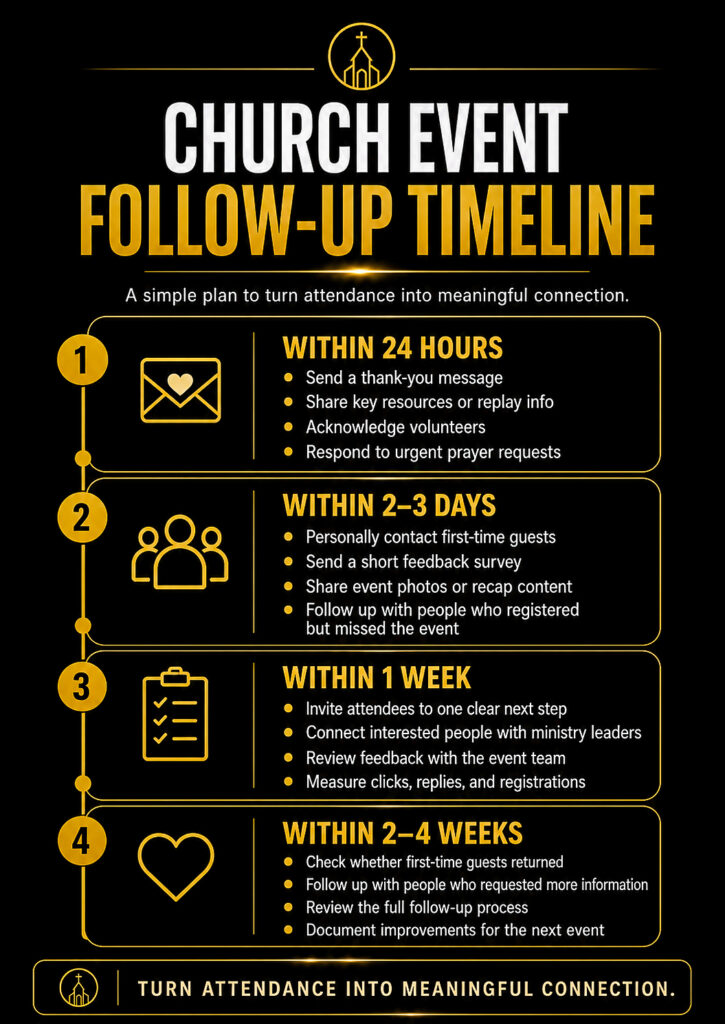
When Should You Follow Up After a Church Event?
Timing matters. Waiting too long can allow the connection to grow cold, while sending too many messages too quickly can feel overwhelming.
Within 24 Hours
- Send a thank-you message.
- Share essential resources or replay information.
- Acknowledge volunteers.
- Respond to urgent prayer or pastoral-care requests.
Within Two to Three Days
- Personally contact first-time guests.
- Send a short feedback survey.
- Share event photos or recap content.
- Contact people who registered but did not attend.
Within One Week
- Invite attendees to the next relevant step.
- Connect interested people with ministry leaders.
- Review feedback with the event team.
- Measure email clicks, replies, and registrations.
Within Two to Four Weeks
- Check whether first-time guests returned.
- Follow up with people who requested more information.
- Review the complete follow-up process.
- Document improvements for the next event.
Common Church Event Follow-Up Mistakes
Waiting Too Long
A follow-up message sent several weeks later may feel disconnected from the event. Prepare messages in advance so they can be sent promptly.
Sending the Same Message to Everyone
A volunteer, first-time guest, ministry leader, and no-show may need different information. Separate your contact list whenever possible.
Making Every Message Promotional
Follow-up should not feel like a constant advertisement. Begin with gratitude, service, prayer, and relationship.
Giving Too Many Next Steps
Too many choices can create confusion. Focus on the most relevant action for each group.
Failing to Respond to Replies
Do not invite attendees to reply if no one is monitoring the inbox. Assign someone to respond to questions and prayer requests.
Collecting Information Without Permission
Be transparent about how contact information will be used. Follow applicable privacy requirements and honor unsubscribe requests.
Focusing Only on Attendance Numbers
Attendance is important, but transformation, connection, and spiritual growth matter more. Ask how the event helped people move forward.
Church Event Follow-Up Checklist
- Assign a follow-up leader before the event.
- Collect accurate attendee information.
- Separate first-time guests, volunteers, attendees, and no-shows.
- Send a thank-you message within 24 hours.
- Personally contact first-time guests.
- Share recordings, notes, and event resources.
- Offer one clear next step.
- Send a short feedback survey.
- Respond to prayer and pastoral-care requests.
- Share an event recap on your website.
- Measure replies, clicks, registrations, and return visits.
- Document improvements for the next event.
Frequently Asked Questions About Church Event Follow-Up
How do I create a follow-up plan for church events?
Begin by identifying the different groups who will attend, the next step you want each group to take, who will contact them, and when each message will be sent. Prepare the messages and assign responsibilities before the event.
What are effective ways to follow up with church attendees?
Effective methods include thank-you emails, personal phone calls, text messages, event resources, feedback surveys, prayer follow-up, social media recaps, and invitations to a clear next step.
When should I follow up after a church event?
Send the first thank-you message within 24 hours. Personal contact, surveys, and recap content can follow within two to three days. Invitations to the next step should generally be sent within the first week.
Should I contact people who registered but did not attend?
Yes. Send a gracious message letting them know they were missed and offer any recordings, resources, or information about the next opportunity to attend. Avoid making them feel guilty.
Can I follow up with church attendees through social media?
Churches can use official social media accounts to share event recaps, answer questions, thank attendees, and announce next steps. Personal communication should be respectful, appropriate, and consistent with your church’s privacy policies.
What should be included in a church event follow-up email?
Include a warm thank-you, a brief reminder of the event, helpful resources, an invitation to one clear next step, and a way to request prayer or ask questions.
How many follow-up messages should a church send?
The number depends on the event and the attendee’s interest. In many cases, a thank-you message, a resource or feedback message, and one next-step invitation are enough. Avoid sending frequent messages without a clear purpose.
Related Church Event Resources
Strengthen the complete church event journey with these additional guides:
Turn Church Event Attendance Into Meaningful Connection
Learning how to follow up after a church event is not simply about sending another email. It is about continuing a relationship.
The event may have introduced someone to your church, but follow-up can help that person feel welcomed, receive prayer, find community, and take another step in their spiritual journey.
Start by keeping the process simple:
- Send a sincere thank-you.
- Provide something helpful.
- Offer one clear next step.
- Make room for a personal response.
Your church does not need a large staff or an expensive system to follow up well. It needs a clear plan, caring people, and a commitment to treating every attendee as more than a number.
The gathering may last only a few hours, but the relationships built through thoughtful follow-up can continue long after the event is over.
11. Continue the Conversation on Social Media
Can churches follow up with attendees through social media? Yes, when it is done respectfully and through appropriate channels.
Social media follow-up can include:
Be careful about sending unsolicited personal messages from private accounts. Use official church channels and follow your church’s privacy and communication policies.
Social media is useful for keeping the conversation going, but your website should remain the central place where people can find accurate information and take action.