
Many churches post on social media, update their website occasionally, and send out emails when an event is coming up.
But that is not the same as having a digital outreach strategy.
A digital outreach strategy is a plan that helps your church consistently connect with people online, build relationships, and guide them toward meaningful engagement with your ministry.
Hold up a minute! Digital outreach is not about getting more likes or followers.
It is about helping more people discover hope, community, and biblical truth through your church.
Let's walk through a simple step-by-step process for creating a digital outreach strategy for your church.
What Is a Digital Outreach Strategy?
Before building a digital outreach strategy, it helps to understand how people discover churches online. The short lesson below explains why SEO matters for churches and how your website can become a powerful outreach tool that works for your ministry 24 hours a day.
Once you've watched the video, continue reading for a step-by-step digital outreach strategy you can begin implementing today.
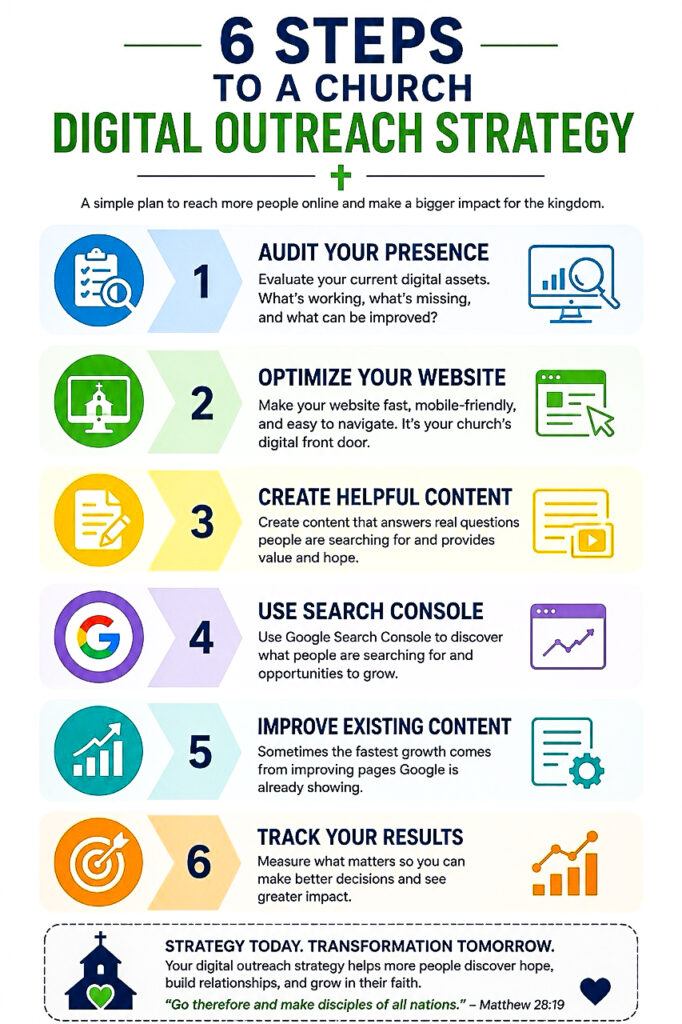
A digital outreach strategy is a plan for using digital tools to reach people where they already spend their time online.
This may include:
- Your church website
- Google Search
- Blog content
- YouTube
- Email marketing
- Online events
The goal is not to be everywhere.
The goal is to be intentional.
Step 1: Audit Your Current Digital Presence
Before creating a strategy, evaluate what you already have.
Ask questions like:
- Is our website up to date?
- Are we publishing content consistently?
- Can visitors easily find service times?
- Are we collecting email addresses?
- Are we tracking website traffic?
- Do we have a clear call to action?
Many churches discover that their greatest opportunities already exist within their current digital assets.
Step 2: Make Your Website the Foundation
Your website should be the center of your digital outreach strategy.
Social media platforms change.
Algorithms change.
Your website is one digital asset that you own and control.
Make sure your website:
- Loads quickly
- Works well on mobile devices
- Clearly explains your ministries
- Includes service information
- Features helpful content
Think of your website as your church's digital front door.

Step 3: Create Content People Are Searching For
One of the most effective digital outreach strategies is creating content around topics people are already searching for.
Examples include:
- How to pray
- How to study the Bible
- How to find purpose
- Marriage advice from a Christian perspective
- Recovery and addiction resources
- Parenting guidance
Every search represents a person.
When your church creates content that answers those questions, you create opportunities for ministry beyond Sunday morning.
Step 4: Use Google Search Console
Google Search Console is one of the most valuable tools available to churches.
It helps you discover:
- What people are searching for
- What keywords are causing your website to appear in Google
- Which pages receive impressions
- Which articles generate clicks
- Opportunities to improve existing content
Search Console can also help you identify pages that are receiving impressions but very few clicks. These pages often represent some of the fastest SEO opportunities because Google is already showing them in search results.
Instead of guessing what content to create next, Search Console provides real data that can guide your decisions.
Step 5: Focus on Improvement, Not Just Creation
Many churches constantly create new content while ignoring content that is already receiving impressions.
Sometimes the fastest growth comes from improving pages Google is already showing.
This may include:
- Updating content
- Improving headlines
- Adding videos
- Adding internal links
- Refreshing images
- Updating your blog's meta title
- Updating your blog's meta description
Small improvements can create significant results over time.
Step 6: Track Your Results
Every digital outreach strategy should include measurement.
Track:
- Website traffic
- Search impressions
- Clicks
- Email subscribers
- Video views
- Event registrations
What gets measured gets improved.
Even small improvements in clicks, impressions, and website traffic can compound over time and help more people discover your church online.
Common Digital Outreach Mistakes Churches Make
Some common mistakes include:
- Relying only on social media
- Ignoring SEO
- Publishing content without a strategy
- Failing to track results
- Creating content people are not searching for
The good news is that these mistakes can be corrected.
If you want to learn more about SEO, keyword research, Google Search Console, and how churches can get found on Google, explore our free How Churches Get Found on Google training and practical guides designed specifically for churches and ministries.
Final Thoughts
A successful digital outreach strategy is not built overnight.
It is built through consistent improvements over time.
When your church combines a strong website, helpful content, SEO, and data-driven decisions, you create more opportunities to reach people online.
The mission has not changed.
The tools simply have.
And every piece of content you publish creates another opportunity for someone to discover your ministry.