
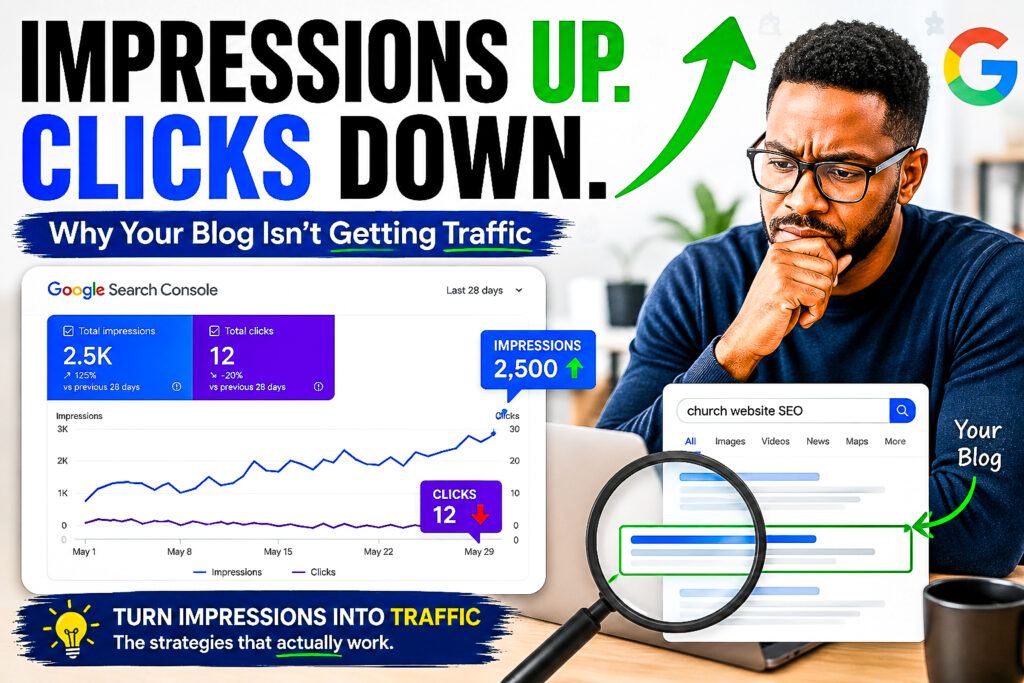
You open Google Search Console and see something encouraging:
Your blog has received hundreds, maybe even thousands, of impressions.
Then you look at the clicks.
Three clicks.
Five clicks.
Maybe none at all.
If you've ever experienced this, don't panic. In many cases, impressions without clicks are not a sign that your content is failing. They are actually a sign that Google is beginning to understand what your page is about.
Let's take a closer look at what is happening behind the scenes and how you can turn those impressions into traffic.
What Is an Impression?
An impression occurs when your page appears in Google's search results.
The user does not have to click your page. They simply need to see it in the search results.
For example, if someone searches for “church website SEO” and your article appears on page one or page two, Google counts that as an impression.
Think of impressions as opportunities.
Every impression means Google has decided your page may be relevant to that search.
Why Is Google Showing My Page?
When you publish a blog, Google reads your:
- Title
- Headings
- Content
- Images
- Internal links
- URL structure
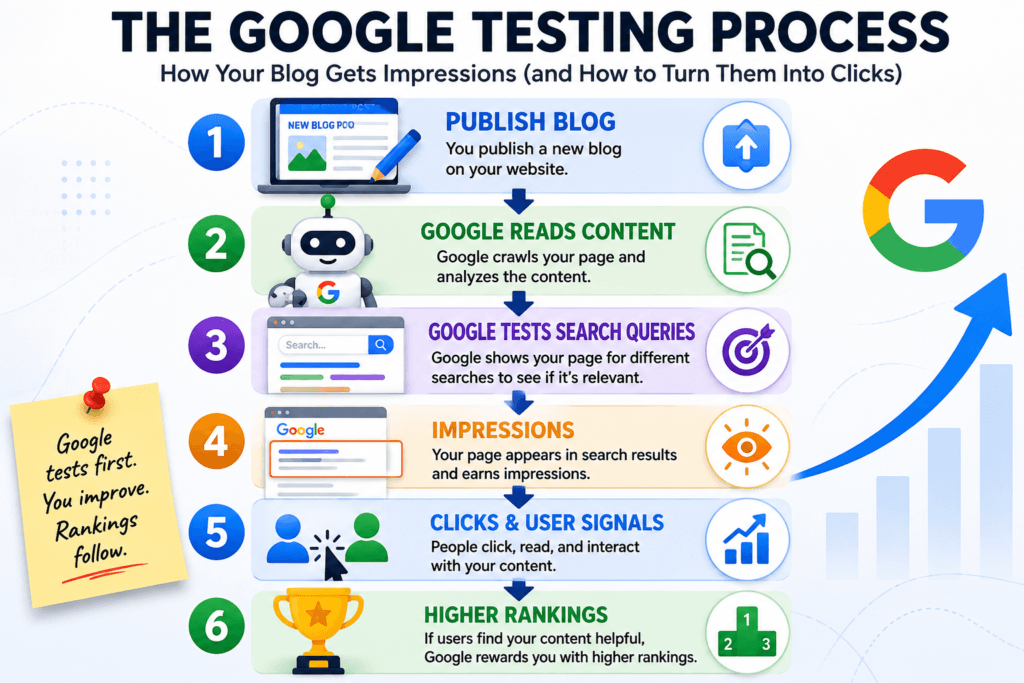
Based on those signals, Google tries to understand what your page is about.
Google then begins testing your content against different search queries.
For example, you might write an article targeting “church website SEO.”
However, Google may also show your page for:
- Church SEO
- SEO for churches
- Church marketing SEO
- How churches rank on Google
Google is constantly evaluating whether searchers find your content useful for those searches.
The Hidden Opportunity Most People Miss
Many website owners see low clicks and immediately write another blog.
That is often a mistake.
Instead of asking, “What should I write next?” ask:
“Why is Google already giving this page impressions?”
If Google is showing your page hundreds or thousands of times, it is already signaling that your content has potential.
In other words, Google is raising its hand and saying:
“I think this page belongs in the conversation.”
Your job is to help Google gain confidence.
Why Impressions Don't Turn Into Clicks
There are several reasons why a page receives impressions but few clicks.
1. Your Title Isn't Compelling
A searcher may see your page but choose a competitor's result because the title is more interesting or specific.
2. Your Meta Description Needs Improvement
The meta description acts like a mini advertisement in the search results.
If it doesn't clearly communicate value, people may scroll past it.
3. Search Intent Doesn't Match
Sometimes Google tests your page for searches that aren't a perfect fit.
This is normal.
As Google collects more data, it learns which searches generate the best results.
4. Your Position Is Too Low
A page ranking in position 15 may receive many impressions but very few clicks because most users never reach the second page of Google.
What Should You Do Next?
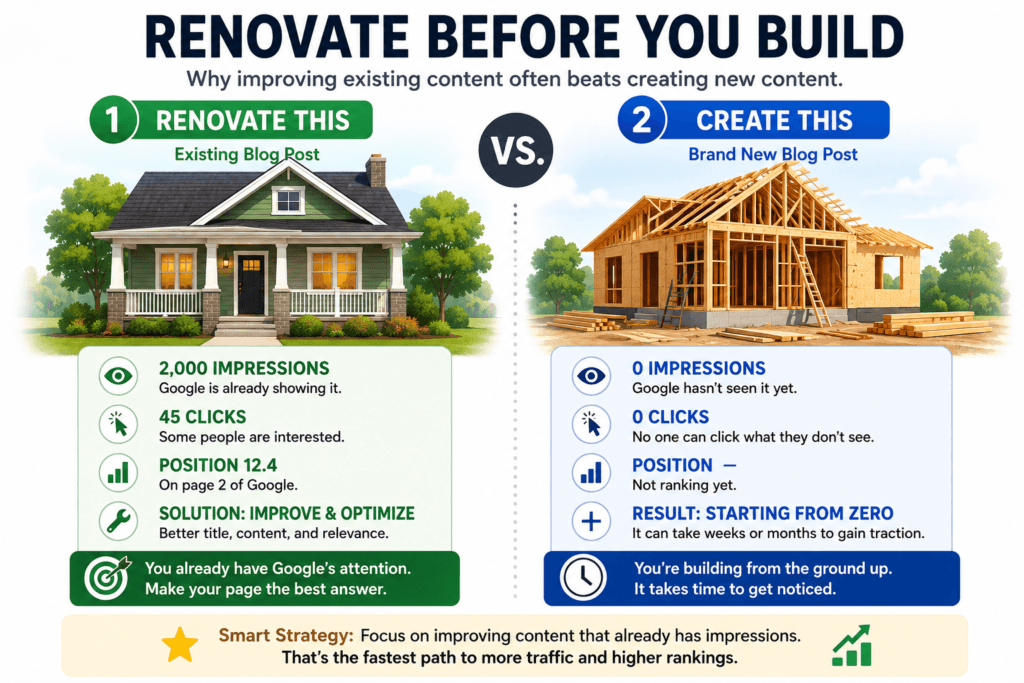
Before writing a new article, consider updating the one that is already receiving impressions.
Start by:
- Reviewing the search queries in Google Search Console
- Updating your title
- Improving your meta description
- Expanding sections related to high-impression keywords
- Adding internal links
- Updating images and examples
Think of your blog like a house.
If Google is already sending visitors to the neighborhood, you may not need to build a new house.
You may simply need to renovate the one you already have.
Final Thoughts
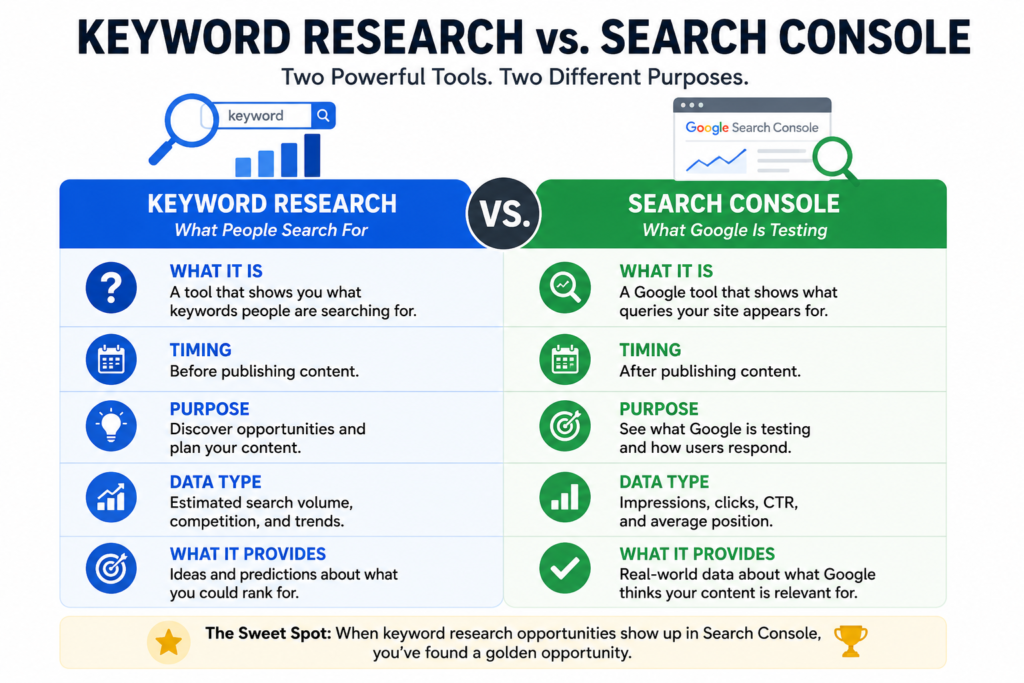
Keyword research helps you discover what people are searching for.
Google Search Console reveals what Google already believes your website can rank for.
The most valuable opportunities often exist where those two overlap.
The next time you see a blog with hundreds or thousands of impressions but very few clicks, don't assume it has failed.
Instead, see it as an opportunity.
Google has already started the conversation.
Now it's your turn to make the page more helpful, more relevant, and more clickable.