
In 2026, a church website is no longer just a place to post service times. For many people, it serves as the first interaction they have with your ministry. Before someone attends a service, watches a sermon, or visits a church event, they often visit the church website first.
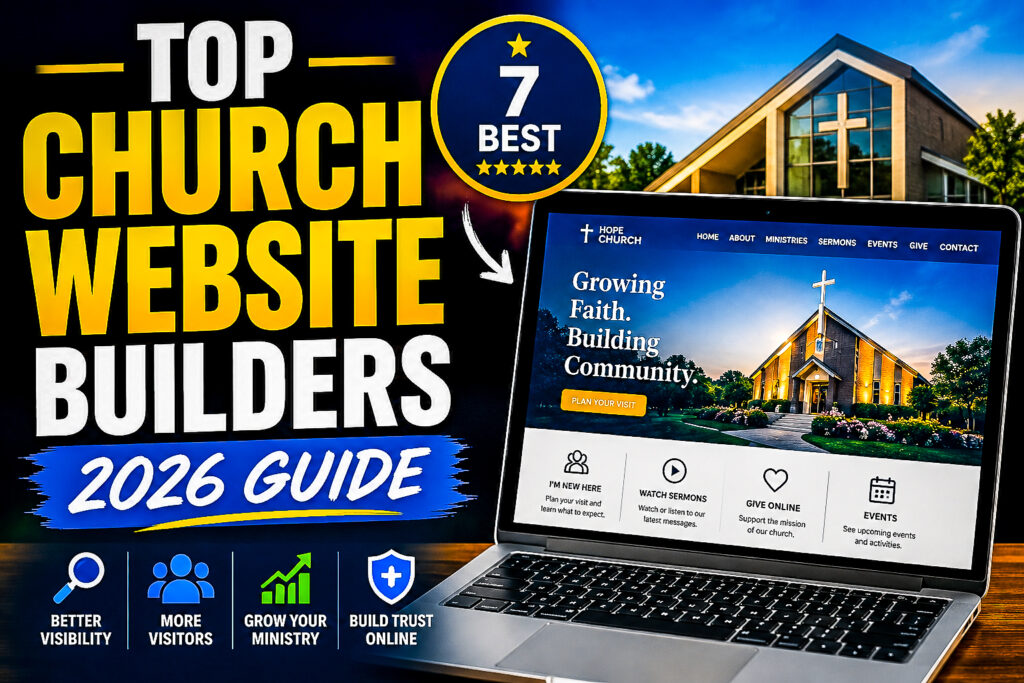
Think of your website as your church’s digital front door.
The question is: Is your website helping people connect with your church, or is it creating barriers?
Why Every Church Needs a Website in 2026
The benefits of a church website in 2026 go far beyond simply having an online presence.
A well-designed website can help your church:
- Reach people searching for answers online
- Share sermons and resources throughout the week
- Promote upcoming events
- Collect prayer requests
- Accept online donations
- Welcome first-time visitors
- Communicate effectively with members
Many churches invest heavily in social media but overlook their website. While social media platforms can be powerful outreach tools, your website is digital real estate that your church owns and controls.
What Features Should a Church Website Have?
Not all church websites are created equal. If you’re building or redesigning a church website, these are some essential features every church should consider.
Clear Service Information
Visitors should immediately be able to find:
- Service times
- Church address
- Contact information
- Directions
Mobile-Friendly Design
Most visitors will access your website using a mobile device. Your website should look great on phones, tablets, and desktop computers.
Plan Your Visit Page
One of the most valuable pages on a church website is a “Plan Your Visit” page. This page helps answer questions visitors often have before attending a service.
Online Giving
Online giving has become an important feature for churches. Providing a secure and convenient way to give can help support ministry growth.
Sermon Archive
A sermon library allows visitors and members to stay connected throughout the week.
Blog Section
A blog can help your church get found on Google by creating content around topics people are actively searching for online.
Top Church Website Builders in 2026
Choosing the right website platform depends on your church’s goals, budget, and technical experience.
Best Church Website Features to Look for in 2026
Before choosing a church website builder, it is important to know which features your church actually needs.
The best church website features in 2026 are not just about modern design or good-looking templates. A strong church website should help people find your church, understand your ministry, and take the next step.
When someone visits your website, they are usually looking for answers. They want to know when your church meets, where you are located, what they should expect, whether you have ministries for their family, and how they can connect.
That is why the platform you choose matters.
A church website builder should make it easy for your team to create pages, update information, add sermons, connect giving, improve SEO, and serve first-time visitors.
Here are some of the most important church website features to look for in 2026.
1. Mobile-Friendly Design
Your church website needs to work well on phones.
Many people will visit your website from a mobile device, especially when they are looking for service times, directions, or information before visiting.
A good church website builder should give you mobile-friendly templates that are easy to read, easy to navigate, and simple to use on smaller screens.
2. Clear Service Times and Location
Every church website should make service times and location easy to find.
If someone has to search too hard to find when your church meets or where you are located, they may leave the website before taking the next step.
Look for a website builder that makes it easy to display service times, addresses, maps, and directions on your homepage, footer, contact page, and visitor pages.
3. Plan Your Visit Page Support
A Plan Your Visit page is one of the most helpful features for first-time guests.
This page can include service times, parking details, children’s ministry information, what to expect, and a simple form for visitors who want to let your church know they are coming.
The best church website builders should make it easy to create a clear visitor pathway, not just a nice-looking homepage.
4. Sermon and Media Features
Your church website should make it easy for people to watch or listen to messages.
A sermon page can help first-time visitors experience your church before they attend. It can also help members catch up on messages they missed.
Look for a platform that allows you to add YouTube videos, sermon audio, livestream replays, message series, or podcast content without making the site hard to manage.
5. Online Giving Integration
Online giving is an important feature for many churches.
Your website builder should make it easy to connect your giving platform, create a giving page, and explain how giving supports the mission of the church.
The goal is not just to collect donations. The goal is to help people understand how their generosity supports ministry, outreach, discipleship, missions, and community impact.
6. Ministry Pages
A church website should help people see where they can belong.
Ministry pages can highlight children’s ministry, youth ministry, small groups, outreach, prayer, recovery, women’s ministry, men’s ministry, and other areas of church life.
A good church website builder should make it easy to create and update ministry pages so visitors and members can understand what your church offers.
7. SEO-Friendly Page Settings
Your church website should be built with Google in mind.
That means your website builder should allow you to update page titles, meta descriptions, headings, image alt text, URLs, and blog content.
These SEO features help your church show up when people search online for churches, ministries, service times, events, and answers in your area.
8. Blog or Content Publishing
A blog can help your church answer questions people are already searching for online.
For example, your church can create helpful content around visiting a church, children’s ministry, prayer, community outreach, Bible questions, or local ministry events.
A church website builder that includes blogging features can help your church create content that supports digital outreach and Google visibility.
9. Google Analytics and Google Search Console Compatibility
Your church should be able to connect the website to tools like Google Analytics and Google Search Console.
These tools help you understand how people find your website, which pages are getting traffic, what keywords are showing up in Google, and where your website can improve.
Without analytics, your church is guessing.
With analytics, your church can make better digital ministry decisions.
10. Easy Editing for Church Teams
The best church website builder is not always the one with the most features.
It is the one your church team can actually use.
If your team cannot update service times, add events, change photos, publish sermons, or edit pages without frustration, the website will eventually become outdated.
Choose a platform that fits your team, your budget, your skill level, and your long-term ministry goals.
Final Thought on Church Website Features
The best church website features in 2026 should help your church do one thing well:
Help people find answers and take the next step.
A church website does not need every bell and whistle. It needs to be clear, mobile-friendly, visitor-focused, easy to update, and built to support ministry.
As you compare the best church website builders, do not only ask, “Which platform looks the best?”
Ask:
Will this help people find our church?
Will this help visitors feel welcome?
Will this help our team keep the website updated?
Will this help our church show up on Google?
Will this support the mission of our ministry?
That is how you choose a church website builder that serves your church well.
WordPress
WordPress remains one of the most powerful church website platforms available today.
Best For:
- Churches focused on SEO
- Churches wanting complete control
- Growing ministries
Pros:
- Excellent SEO capabilities
- Highly customizable
- Thousands of plugins
- Full ownership of your website
Cons:
- Requires more setup and maintenance
Recommended WordPress Training and Hosting
If your church is considering WordPress but you’re not sure where to start, one platform worth exploring is Wealthy Affiliate.
Wealthy Affiliate provides website hosting, WordPress training, keyword research tools, and educational resources that can help beginners learn how to build and grow a website. For pastors, church media teams, and ministry leaders looking to improve their digital outreach, having access to both training and tools in one place can be extremely valuable.
Learn more here:
https://www.wealthyaffiliate.com?a_aid=aa278f14
Wix
Wix continues to be a popular option for churches wanting a simple drag-and-drop website builder.
Best For:
- Small churches
- Volunteer-led teams
- Quick website launches
Pros:
- Easy to use
- Fast setup
- Minimal technical knowledge required
Cons:
- Less flexibility than WordPress
Squarespace
Squarespace is known for beautiful templates and professional-looking designs.
Best For:
- Smaller ministries
- Churches prioritizing aesthetics
Pros:
- Attractive templates
- Easy content management
Cons:
- Limited customization options
Hostinger Website Builder
Hostinger offers an affordable solution for churches looking for a simple website platform without a steep learning curve.
Best For:
- Church plants
- Small ministries
- Budget-conscious churches
Church Digital Marketing Strategies That Work
Having a website is only the first step. Churches that want to increase their online visibility should focus on several digital marketing strategies.
Blogging
Publishing helpful content regularly can help your church appear in Google search results when people search for answers online.
Local SEO
Optimizing your website and Google Business Profile can help local residents discover your church.
Video Content
YouTube is the second-largest search engine in the world. Churches can use video content to reach people throughout the week.
Email Marketing
Building an email list helps you stay connected with visitors and members while strengthening engagement.
Why Churches Need Online Donations
Online giving is no longer optional for many ministries.
People increasingly expect to give using their phones, tablets, or computers. Providing online giving options offers several benefits:
- Greater convenience
- Recurring giving opportunities
- Better donor engagement
- Support for online ministry efforts
The easier you make giving, the easier it becomes for people to support the mission and vision of your church.
Final Thoughts
A church website should do more than simply exist. It should help people discover your church, learn about your ministry, and take their next step in faith.
Whether you choose WordPress, Wix, Squarespace, or another platform, the goal remains the same: create a welcoming digital experience that helps people connect with Jesus and your church community.
Remember, your website isn’t just a website.
It’s your church’s digital front door.
Additional Resources
Building a church website doesn’t have to be overwhelming. Whether you’re launching a brand-new website or improving an existing one, the right tools and training can save you countless hours.
If you’re interested in learning WordPress, SEO, keyword research, and website growth strategies, check out Wealthy Affiliate:
Free Church Website SEO Checklist
Want to see how your church website measures up?
Download our free Church Website SEO Checklist and discover simple ways to improve your church’s online visibility, attract more visitors, and strengthen your digital outreach.